Skip to content

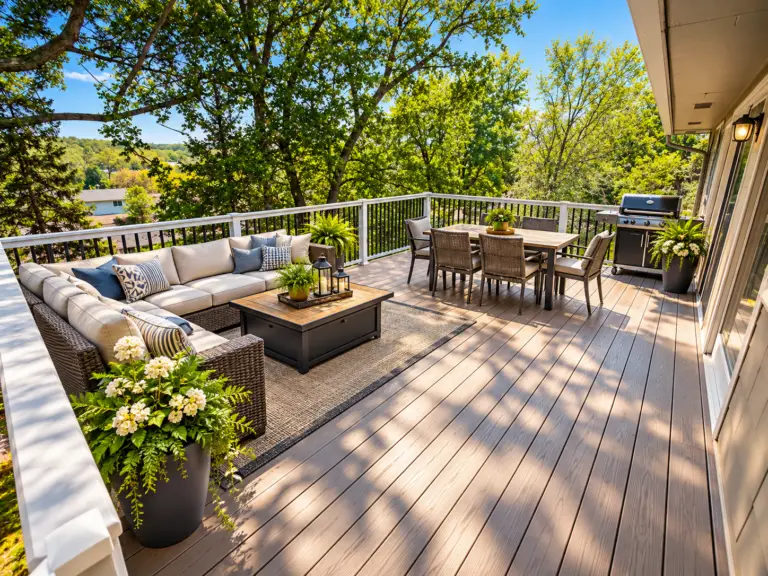
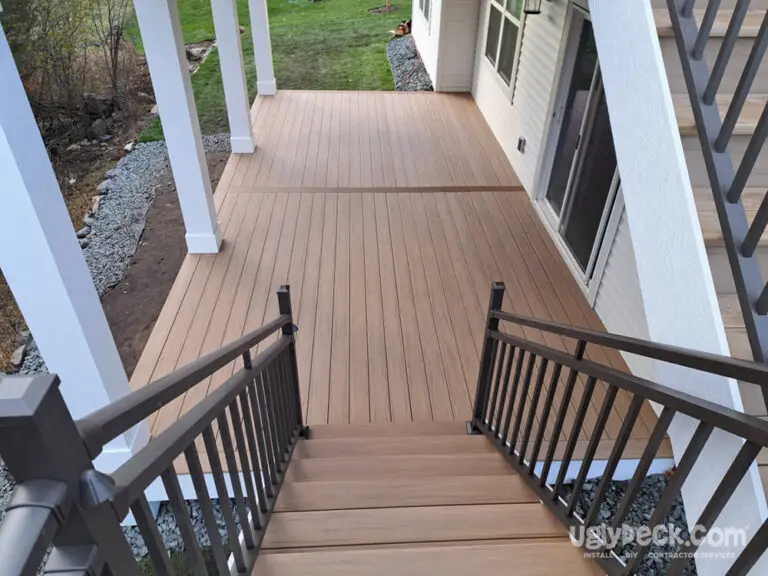
Is TimberTech decking worth the investment for Minnesota homeowners? For many households, yes—especially if the goal is a beautiful, low-maintenance outdoor living space without the routine staining and sealing associated with a traditional wood deck. TimberTech can cost more upfront than some wood options, but the appeal is years of everyday use, reduced finishing work, and a range of attractive styles. No decking product guarantees a particular increase in home value or return on investment.
UglyDeck helps Twin Cities homeowners choose low-maintenance decking and professionally install decks built for the local climate. Before choosing a TimberTech collection, consider the whole project—not just the price of a deck board.
What makes TimberTech decking appealing?
TimberTech offers both composite and advanced PVC decking collections, giving homeowners different ways to achieve a wood-inspired look with less upkeep. Products vary in color, texture, construction, price, warranty terms, and manufacturer installation requirements. “TimberTech” is a brand, not one single type of board.
- Less routine finishing: Composite and PVC decking typically do not need periodic painting, staining, or sealing like conventional wood decking.
- Design choices: Different grain patterns, colors, and board profiles allow you to coordinate a deck with your home and landscaping.
- Engineered materials: These collections are designed for outdoor exposure, although performance and care requirements differ by product.
- Long-term usability: Less time refinishing a deck can mean more time enjoying it.
Low-maintenance does not mean maintenance-free. Homeowners still need to remove debris, clean surfaces according to the manufacturer’s instructions, and periodically inspect the structure and connections.
How does TimberTech hold up in Minnesota weather?
Twin Cities decks experience snow, ice, freeze-thaw cycles, summer heat, and strong sunlight. Choosing an outdoor decking product is only part of the equation: drainage, ventilation, framing, fastener compatibility, and correct installation are equally important.
TimberTech’s composite and PVC options can be practical choices for our climate because they avoid the regular staining and sealing associated with wood deck boards. However, no deck material is completely immune to scratches, staining, heat buildup, or weather-related wear. Color, exposure, and product collection can affect how a deck feels underfoot on sunny days.
For a broader comparison, read Best Decking for Minnesota Weather: Composite, PVC or Wood?.
TimberTech composite vs. PVC: what’s the difference?
TimberTech composite decking
Composite decking combines engineered materials into boards designed to resemble wood while reducing routine upkeep. Different TimberTech composite lines have different surface finishes and performance characteristics. A composite collection may be a good fit when you want a balance of appearance, durability, and budget.
TimberTech advanced PVC decking
TimberTech also offers advanced PVC decking made without wood fibers in the board core. These collections have their own design options and performance characteristics, and are often positioned toward the premium end of the market. The right choice depends on the specific collection, not simply the words “composite” or “PVC.”
Ask to see actual samples in natural light and compare the manufacturer’s written warranty and care documentation for the exact boards being considered.
Will a TimberTech deck increase your home’s value?
A well-designed outdoor living area can improve a home’s appeal to potential buyers, particularly when it complements the house and feels like usable living space. But resale value depends on location, condition, buyer preferences, project cost, and the housing market at the time of sale.
We would not promise that a TimberTech installation will return a fixed percentage of its cost. Instead, consider three kinds of value:
- Enjoyment today: Space for dining, gatherings, relaxing, or everyday family use.
- Time saved: Reduced need for recurring staining and sealing compared with traditional wood decking.
- Visual appeal: A coordinated design with attractive decking, stairs, and railing.
A deck built primarily for resale may call for different choices than one your family plans to use for many years. Share that goal with your deck designer at the start.
What does a professionally installed TimberTech deck cost?
As a starting budgeting guideline, small, professionally installed low-maintenance decks at UglyDeck generally start around $15,000, while larger, elevated, or more elaborate designs cost more. This is not a TimberTech-specific price or a guaranteed quote.
The finished cost depends on deck size and height, foundations and framing, the selected TimberTech collection, aluminum railing, stairs, site access, demolition, and permitting. A materials-only estimate should not be confused with a full installation proposal.
See our Minnesota composite deck installation cost guide for an explanation of the elements that shape a professional quote.
Why professional installation matters as much as board selection
TimberTech boards sit on a structural system that must be appropriately designed and installed. Correct joist spacing, fastening, ventilation, stairs, railings, ledger connections, and water management all matter. In Minnesota, the foundation must also be suited to site conditions and applicable requirements.
UglyDeck emphasizes the work underneath the finished surface, including its approach to engineered helical foundations and deck framing. To understand that construction-focused philosophy, read The UglyDeck Difference.
UglyDeck also installs aluminum railing systems, giving homeowners coordinated low-maintenance options for the complete deck rather than just the walking surface.
How do you know if TimberTech is worth it for your project?
TimberTech may be a strong choice if you want a long-term outdoor living area, prefer lower routine upkeep than wood, and value a particular color or style. Another composite or PVC collection could be a better fit if budget, texture, or design preferences point elsewhere. The right decision is a comparison based on your actual deck—not a universal brand ranking.
Before choosing, ask to compare real samples, discuss sun exposure, review the manufacturer’s warranty terms, and request a written quote that identifies the specific decking and railing products.
Plan your TimberTech deck with UglyDeck
Considering a TimberTech deck in the Twin Cities? UglyDeck can help you compare decking collections, discuss aluminum railing choices, and plan a professionally installed low-maintenance deck suited to your home. Explore our deck installation services and set up an appointment to review your project, budget, and preferred materials.