Skip to content

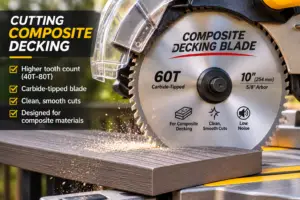
Choosing the right saw blade for decking starts with one question: Are you cutting traditional wood-plastic composite or a plastic-based decking product? At UglyDeck, our carpenters use different blades for different materials. The blade that leaves a clean edge on one board can generate excess heat and melted residue on another.
Composite vs. PVC Decking: Why the Blade Matters
Traditional wood-plastic composite decking combines wood fibers and plastic. Many products cut cleanly with a sharp, carbide-tipped finish blade suited to the saw and the manufacturer’s recommendations. Plastic-based decking, including certain PVC and mineral-based products, may behave differently under a saw: friction can heat the cut and cause material to soften, smear, or collect on the blade.
There is no single tooth count that’s best for every decking board. Check the decking manufacturer’s current installation instructions first, then select a blade approved for your saw and material.
What UglyDeck’s Lead Carpenters Actually Use
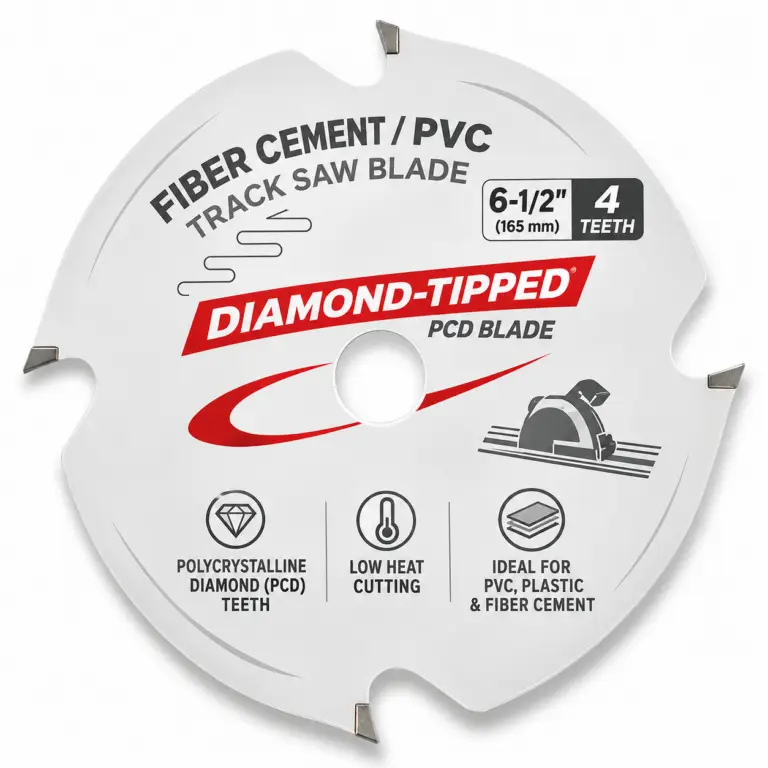
For certain plastic-based decking products, including Deckorators Surestone, UglyDeck’s lead carpenters use a Milwaukee 6-1/2-inch, four-tooth, diamond-tipped fiber cement track saw blade. In their jobsite experience, this low-tooth-count blade cuts these boards more effectively than the high-tooth-count blades they commonly use on traditional composite decking, which can create excess heat and melted buildup.
Important: Milwaukee markets this blade for fiber cement. Our carpenters’ use on decking is a report of field experience, not a claim that Milwaukee or Deckorators approves this blade for every decking product. Confirm the blade’s permitted materials, saw compatibility, arbor, speed rating, guard clearance, and the decking manufacturer’s cutting requirements before using it. A fiber-cement blade should not be treated as a universal PVC blade.
Quick Guide: Which Blade Should You Choose?
| Decking type | Blade approach | What to watch for |
|---|---|---|
| Traditional wood-plastic composite | Sharp, compatible carbide-tipped finish blade; often a higher tooth count for smooth crosscuts | Chipping, rough edges, dull teeth |
| PVC and other plastic-based decking | Follow product-specific instructions; some materials cut better with fewer teeth and less heat buildup | Melting, smearing, gummy buildup |
| Deckorators Surestone (UglyDeck jobsite practice) | Four-tooth Milwaukee diamond-tipped fiber cement track saw blade used by our lead carpenters | Verify tool and product compatibility; do not assume manufacturer endorsement |
Circular Saws, Miter Saws, Table Saws, and Jigsaws
Circular saws and track saws
These are useful for crosscuts and trimming decking to length. Use a stable work surface, support both sides of the cut, and select a blade designed for the particular saw. Track saw blades are not automatically interchangeable with standard circular saw blades.
Miter saws
Miter saws are convenient for repeated square and angled cuts. For many traditional composites, a suitable carbide-tipped finish blade produces a clean cut. Avoid assuming the same blade is ideal for PVC or other plastic-based boards.
Table saws
A table saw can help rip boards lengthwise when the decking manufacturer allows it. Use the appropriate guard, fence, blade, and safe-feed practices. Long decking boards require adequate infeed and outfeed support.
Jigsaws
A jigsaw is useful for curves and notches around posts. Choose a blade appropriate to the specific material, support the board, and test the cut on scrap before working on a visible edge.
How to Get Cleaner Cuts
- Identify the product. Check the exact decking collection, not just the brand name.
- Make a test cut. Use an offcut to inspect edge quality, heat, and residue before cutting installed boards.
- Use a sharp blade. Dull or unsuitable teeth can increase friction and damage the edge.
- Support the board. Keep the workpiece stable and prevent binding or pinching at the kerf.
- Follow the saw and decking instructions. Wear eye and hearing protection and use appropriate dust control; cutting composite and mineral-based boards can generate hazardous dust.
- Allow for movement. Follow the decking manufacturer’s end-gap and spacing requirements, which can vary by product and temperature.
Need Help Choosing Decking or Building Your Deck?
At UglyDeck, we help Twin Cities homeowners choose decking materials and understand how to install them correctly. Our DIY decking program offers materials and guidance, while our team also handles complete professional deck installations. If you’re planning a project, get started with UglyDeck.