Skip to content

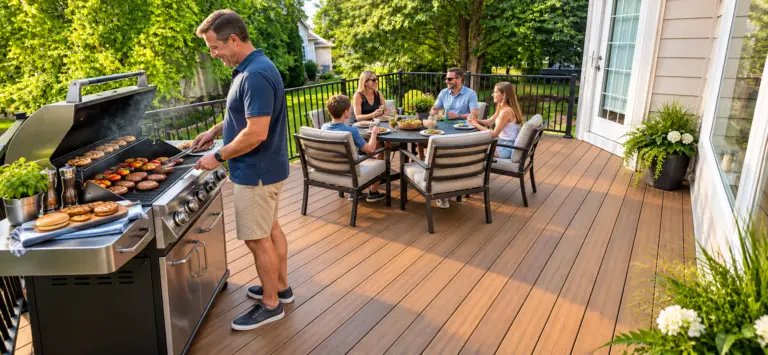
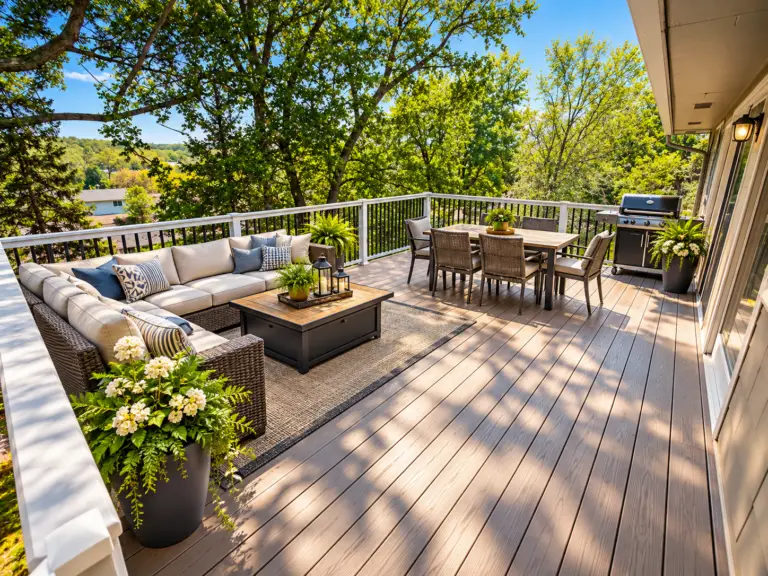
Grilling on your deck is a great way to enjoy a Minnesota fall afternoon, but a safe cookout starts with where you place the grill. Flames, grease, radiant heat, and hot coals can damage decking, railings, and nearby siding. These eight practical tips will help you protect your home and guests whether your deck is made of wood, composite, or PVC.
1. Give Your Grill Plenty of Clearance
Keep the grill a safe distance from siding, railings, furniture, and other combustible materials. Follow the specific clearances in your grill manufacturer’s manual, which take priority over a general rule of thumb. Don’t place a grill beneath overhanging branches or near open windows and doors where smoke can enter the house. The National Fire Protection Association’s grilling safety guidance is a helpful reference.
2. Remember: Composite and PVC Decking Aren’t Fireproof
Low-maintenance decking doesn’t eliminate grilling risks. Composite and PVC boards can be damaged by concentrated heat, grease, and falling embers, and some products can ignite under the wrong conditions. Wood decking is also combustible. No matter which surface you have, maintain proper grill clearances and follow the decking manufacturer’s recommendations.
3. Understand the Differences Between Gas and Charcoal Grills
For a gas grill, inspect the hose and connections as directed by the manufacturer, and check for leaks using the recommended procedure—not a flame. If you smell gas while cooking, turn off the burners and gas supply if you can do so safely; follow the manufacturer’s instructions and move away if the leak persists. For charcoal, use only appropriate lighting products and never add starter fluid to hot coals. Let ashes cool completely before disposing of them in a covered metal container kept away from combustible surfaces.
4. Prevent Grease Fires and Know When to Stop Cooking
Clean grease trays and cooking surfaces regularly to reduce flare-ups. Never leave a lit grill unattended. If a grease fire develops, don’t throw water on it. Follow the grill manufacturer’s emergency instructions, shut off the heat or fuel only if safe, and keep people clear. If the fire is growing or cannot be controlled safely, move away and call 911. Don’t attempt to move a burning or hot grill.
5. Protect Your Deck Surface Without Trapping Heat
Grill mats can catch drips, but not every mat is appropriate for every decking material or grill. Some mats can trap heat or moisture, discolor boards, or conflict with a decking manufacturer’s care guidance. Choose only products compatible with both your grill and deck surface, and remember that a mat does not replace required clearance from combustible materials. Clean spills promptly according to the decking manufacturer’s instructions.
6. Keep Children, Pets, and Foot Traffic Away
Set up a clear cooking zone where guests won’t brush past hot surfaces or snag a grill hose. Keep children and pets well away from the grill, and avoid placing it directly beside stairs, doorways, or the main route between seating areas. Position prep tables so the cook can work without blocking an exit or carrying hot food through a crowd.
7. Be Extra Careful With Covered Decks and Pergolas
A roof, low overhang, or pergola can create hazards from heat, smoke, and combustion gases. Never assume that an open-sided covered area is approved for grilling. Follow the grill manufacturer’s restrictions for overhead structures and ventilation. Grills should be used outdoors only, never in garages or enclosed spaces; carbon monoxide can accumulate in inadequately ventilated areas. If you’re considering a pergola, plan its location alongside your cooking area rather than improvising later.
8. Design Your New Deck With Grilling in Mind
If you’re planning a new deck, decide where the grill will go before finalizing the layout. Allow room for manufacturer-required clearances, safe circulation, prep space, and comfortable dining or lounging areas. Think about the direction smoke tends to travel, proximity to doors and windows, and where people will walk to reach the yard. A generous, flexible single-level deck can make it easier to separate the cooking area from furniture without squeezing everything into small zones.
For more ideas on how layout, railings, shade, and furniture work together, explore our deck design ideas and completed project gallery.
Make Room for Safer Outdoor Entertaining
The best grilling setup combines careful everyday habits with a deck layout that gives the cook and guests room to move. UglyDeck helps Twin Cities homeowners plan professionally installed decks and offers DIY deck options for homeowners who want to take on part of the project. Get started with UglyDeck to discuss a deck designed around the way you entertain.