Skip to content

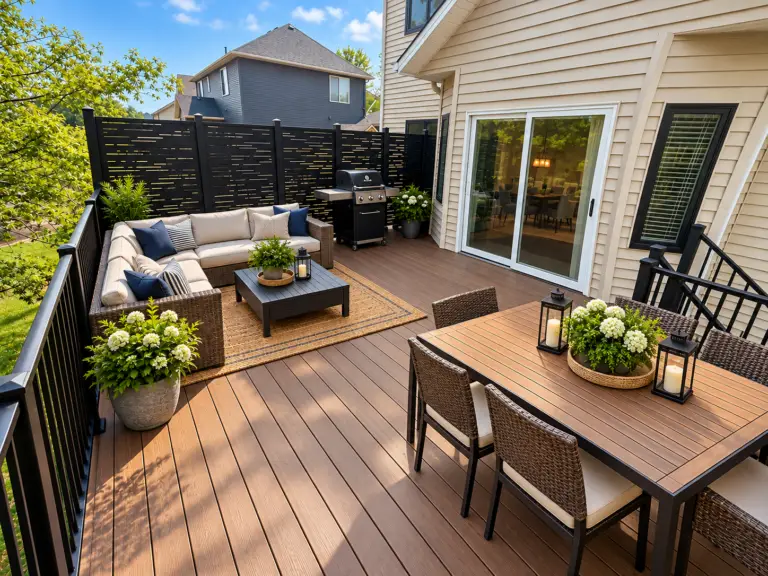
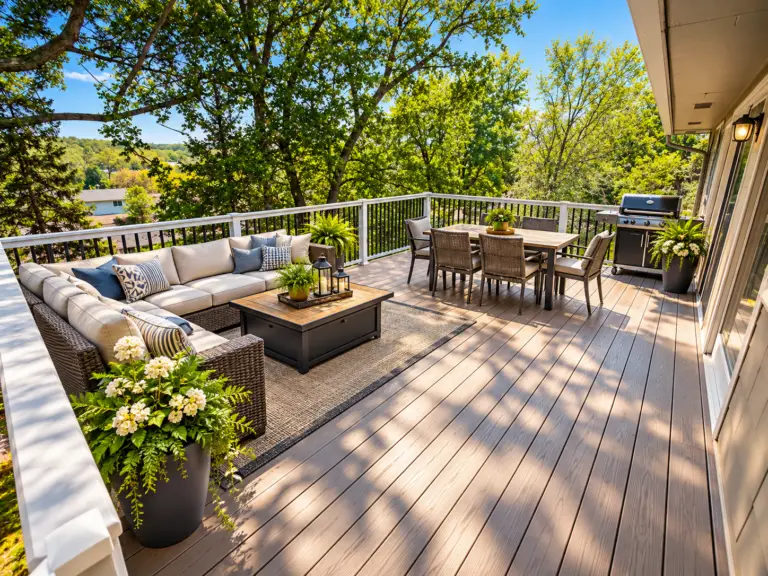
Choosing outdoor deck furniture is about more than finding a set that looks good in a showroom. The right furniture should fit your deck, support the way your family uses the space, and stand up to Minnesota’s changing seasons. These eight practical tips can help you plan a comfortable outdoor living area without crowding your deck or damaging its surface.
1. Measure Your Deck Before Buying Furniture
Start with the usable space, not just the overall deck dimensions. Account for stairs, doors, railings, grills, and any changes in elevation. Mark out the footprint of a dining table or sectional with painter’s tape or cardboard to see how it feels before purchasing. Leave comfortable paths around furniture so people can move through the space without squeezing past chairs.
2. Choose Furniture Around How You’ll Use the Space
If family dinners are the priority, begin with a dining table and enough room to pull chairs back. If you prefer relaxing or entertaining, a conversation set might be a better fit. On larger decks, consider separate dining and lounge zones. For inspiration on how different layouts work, browse our deck project gallery.
3. Compare Outdoor Furniture Materials
Different materials have different strengths and care requirements:
- Powder-coated aluminum: Generally lightweight, rust-resistant, and easy to move. Check the quality of the finish and hardware.
- Teak and other outdoor woods: Offer a natural appearance but may weather or require care depending on the look you want to maintain.
- HDPE or poly lumber: Often low-maintenance and substantial in weight, with many colors and styles available.
- Outdoor wicker: Can provide a comfortable woven look; check that the frame and weave are rated for outdoor use.
Whatever you choose, compare warranties, replacement cushion availability, and cleaning instructions rather than judging durability by appearance alone.
4. Protect Composite Decking From Furniture Scratches
Composite decking is built for outdoor use, but no decking surface is completely scratch-proof. Use furniture feet or pads recommended for your decking and furniture materials, and lift heavy pieces rather than dragging them. Avoid abrasive or incompatible pads that could mark the boards. Follow the decking manufacturer’s guidance for rugs, mats, and accessories; some materials can trap moisture or affect the surface.
5. Think About Sun, Shade, and Surface Heat
Pay attention to when the deck gets the strongest sunlight. Metal furniture and darker cushions can become uncomfortable in direct sun, and exposed decking can heat up too. Umbrellas, strategically placed seating, and pergolas can make the space more enjoyable. If you’re planning a larger outdoor living upgrade, explore UglyDeck’s pergola and shade options.
6. Plan for Minnesota Weather and Winter Storage
Look for fabrics intended for outdoor exposure, but remember that even weather-resistant cushions benefit from drying and proper storage. Secure lightweight furniture during high winds, and consider where cushions, umbrellas, and accessories will go during winter. Check each manufacturer’s instructions before leaving furniture outdoors through snow and freezing temperatures.
7. Match Furniture Size to Railings, Stairs, and Traffic Flow
Oversized furniture can make a deck feel smaller than it is. Consider sightlines from inside the house, the location of stair openings, and how people reach the grill or yard. Keep exits and stair access clear. If you’re designing a new deck, deciding on your furniture layout early can help determine the right deck dimensions and where railings and stairs should go. Many older decks were built with multiple smaller levels, a popular design approach in the late 20th century. Today, many homeowners prefer a larger, single-level deck because its open floor plan offers more flexibility. You can rearrange a dining table, expand a seating area, or change how you use the deck over time without being confined to separate, smaller platforms. Multi-level designs can still make sense for sloped yards or specific needs, but a spacious single-level layout is often easier to furnish and adapt.
8. Add Lighting and Finishing Touches Thoughtfully
Outdoor lighting can extend the hours you enjoy your deck, while planters and side tables make a seating area feel finished. Choose accessories that won’t block circulation or create tripping hazards. Keep grills and other heat sources positioned according to appliance instructions and applicable safety requirements, away from combustible furnishings.
Planning a Deck Around Your Outdoor Furniture?
The easiest time to plan furniture zones, shade, stairs, and railing placement is before your deck is built. UglyDeck helps Twin Cities homeowners design and build outdoor spaces for the way they want to live. We offer professionally installed decks as well as DIY deck options for homeowners who want to take on part of the project.
Explore our completed deck projects for ideas, then get started with UglyDeck to talk through your space, goals, and design.