Skip to content

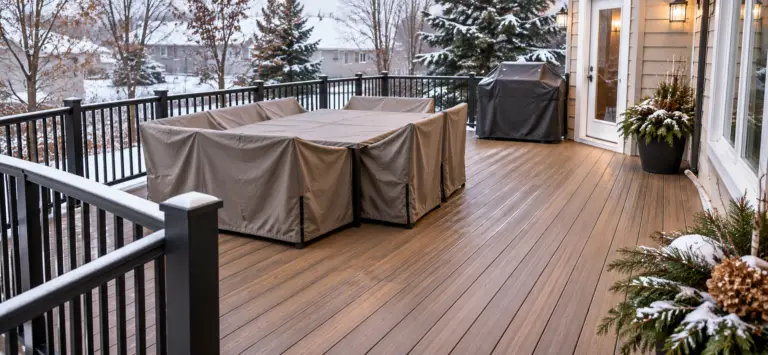
Knowing how to prepare your deck for winter can help protect its appearance and make spring cleanup easier. Minnesota decks face wet leaves, freezing rain, heavy snow, and repeated freeze-thaw cycles. Whether you have wood, composite, or PVC decking, a little fall maintenance goes a long way. Use this practical checklist before the first significant snowfall.

1. Clear Furniture, Planters, and Seasonal Accessories
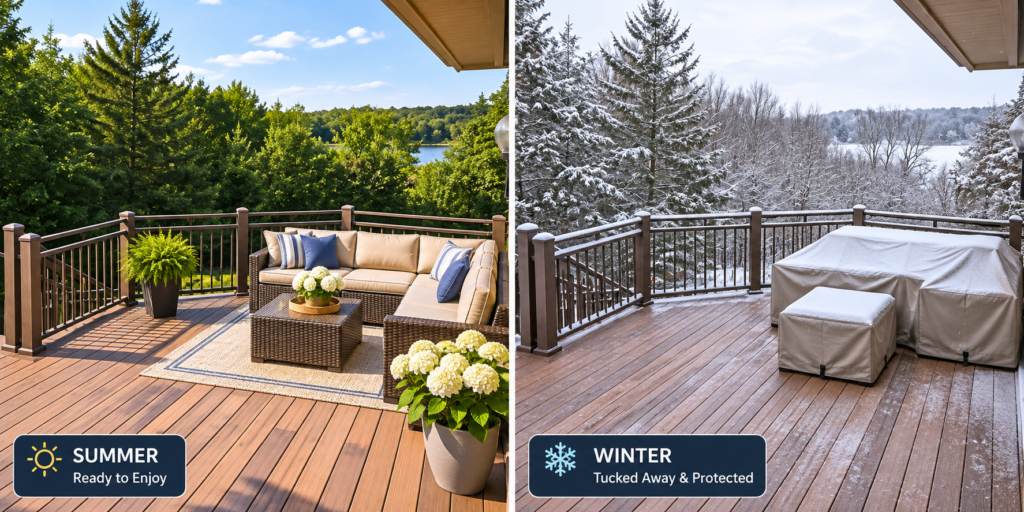
Move cushions, umbrellas, lightweight furniture, and other items that aren’t intended for winter exposure into dry storage. Empty planters that could crack when water freezes, and check beneath the deck for toys, garden supplies, and other forgotten items. Heavy planters can hold moisture against boards; if you leave them outside, follow the decking manufacturer’s guidance and make sure drainage is not blocked.
2. Sweep Away Leaves, Pine Needles, and Dirt
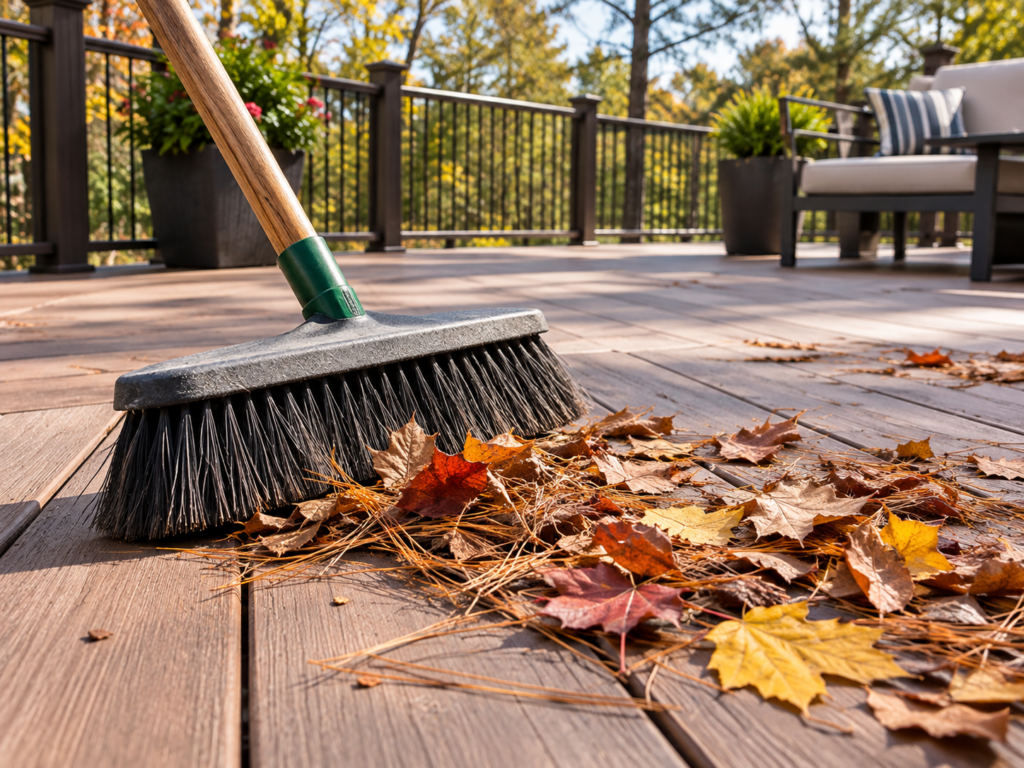
Organic debris traps moisture and can stain surfaces or encourage unwanted growth. Sweep the deck, clear gaps between boards as permitted by the manufacturer, and pay attention to corners near railings and stairs. Don’t allow piles of leaves to remain against the house or around drainage paths. Cleaning now is easier than dealing with compacted, wet debris after the thaw.
3. Clean Wood, Composite, and PVC Correctly
Decking materials don’t all use the same cleaning products or methods. For composite and PVC, follow the board manufacturer’s care instructions for approved cleaners, brushes, and rinsing. Wood may need a cleaner formulated for its finish and condition. Avoid assuming that bleach, pressure washing, or aggressive scrubbing is safe for every surface. Rinse thoroughly when directed and let the deck dry as appropriate.
4. Inspect Railings, Stairs, and Structural Connections
Before snow hides the details, check for loose railings, unstable steps, damaged boards, corroded connectors, and signs of movement. Look at the ledger connection where the deck meets the house and examine visible framing and footings for deterioration or shifting. If anything feels loose or unsafe, limit access and have it evaluated by a qualified professional. Winter preparation is not a substitute for addressing structural problems. Our deck safety warning signs guide explains what to watch for.
5. Give Wood Decks Extra Attention Before Freezing Weather
Wood decking may benefit from periodic staining or water-repellent treatment, depending on the product and existing finish. Don’t rush to apply stain just because winter is approaching: most coatings require suitable temperatures, a dry surface, and adequate curing time. Follow the coating manufacturer’s instructions and local weather forecast. If conditions aren’t right, clean and inspect the deck now and schedule refinishing for a suitable season.
6. Remove Snow Without Damaging Deck Boards
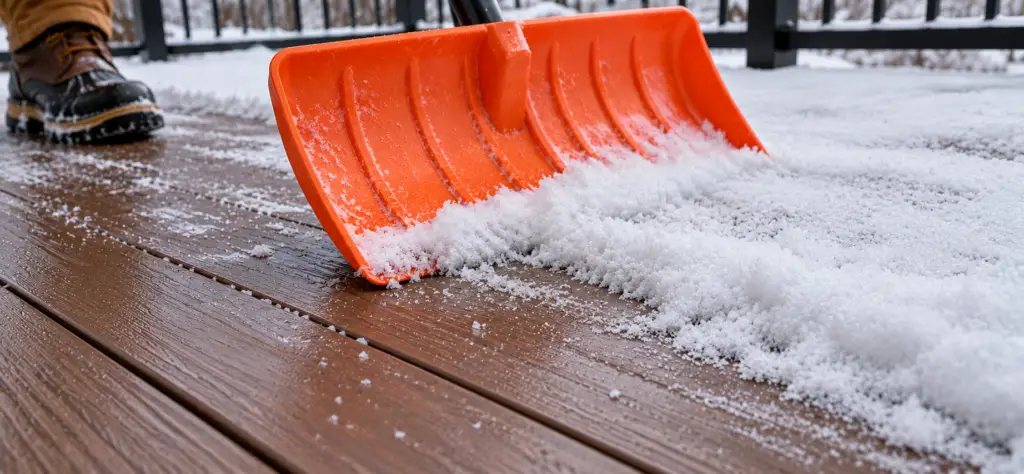
Not every snowfall requires clearing a structurally sound deck, but keep doors, stairs, and necessary access routes usable and safe. When removing snow, follow the decking manufacturer’s guidance. A nonmetallic shovel or broom may be appropriate for some surfaces, while sharp metal edges can gouge boards. Work carefully rather than chopping at packed ice. Never assume a deck can support unusually heavy snow accumulation or large snow piles pushed from a roof; if you suspect a structural concern, seek professional guidance rather than walking onto the deck.
7. Check Ice-Melt Compatibility Before Using It
There is no single deicer that’s automatically safe for every wood, composite, or PVC deck. Some manufacturers allow specific products under certain conditions, while others caution against particular salts, sand, or additives. Consult the decking manufacturer’s current instructions and use only the recommended amount. Avoid products with dyes or abrasive ingredients unless expressly approved. Sweep away residue when conditions permit.
8. Protect Railings, Lighting, and Outdoor Features
Inspect outdoor light fixtures and cords for damage before winter. Remove or secure accessories that could blow loose, and avoid hanging heavy decorations from railings. If you decorate for the holidays, choose lights rated for outdoor use, follow electrical safety instructions, and keep cords out of walking paths. Evergreen arrangements and weather-tolerant accents can add seasonal interest without blocking stairs or trapping moisture against decking.
Winter Deck Maintenance: Quick Checklist
- Store cushions, umbrellas, and weather-sensitive accessories.
- Remove leaves, dirt, and debris from decking and drainage areas.
- Clean boards with products approved for your decking material.
- Inspect railings, stairs, ledger connections, and visible framing.
- Refinish wood only when weather and product instructions allow.
- Use manufacturer-approved snow-removal tools and deicers.
- Secure decorations and keep stairs and exits clear.
Planning Ahead for Next Winter?
Composite and PVC decking can reduce the ongoing staining and sealing work associated with many wood decks, but every deck still needs routine cleaning and inspection. If your existing deck has structural issues or you’re considering an upgrade, explore our composite decking pros and cons and browse completed UglyDeck projects.

UglyDeck helps Twin Cities homeowners with professionally installed decks and offers DIY deck options for those who want to take on part of a project. Get started with UglyDeck to discuss replacing or planning a deck that fits your home and Minnesota’s seasons.