Skip to content

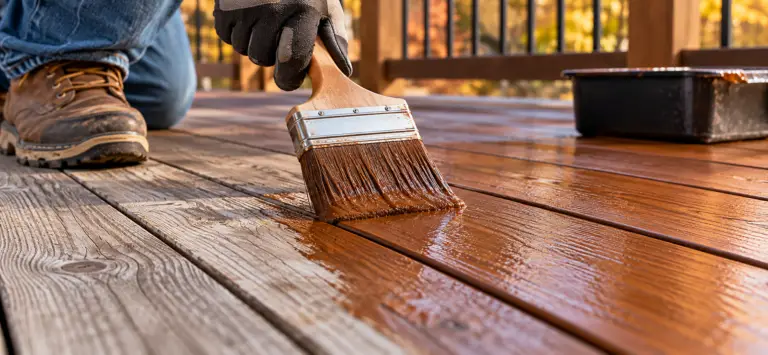
The best time to stain a deck in Minnesota isn’t determined by the calendar alone. Spring and fall can both offer suitable conditions, but the wood must be dry, the forecast must cooperate, and temperatures must stay within the stain manufacturer’s requirements throughout application and curing. Here’s how to decide when to tackle the job—and when to wait.
1. Start With the Weather, Not the Season
Check the instructions for the exact stain or sealer you’re using. Products differ in their permitted air and surface temperatures, moisture requirements, drying times, and rain-free windows. A mild afternoon doesn’t necessarily mean conditions are suitable: cold overnight temperatures, heavy dew, or an approaching shower can interfere with curing. Also avoid applying coatings to boards that are excessively hot in direct sun.
2. Is Spring or Fall Better for Deck Staining in Minnesota?
Spring can be a good choice once snow has melted, the deck has been cleaned, and the wood has dried sufficiently. The challenge is unpredictable rain and lingering moisture.
Early fall can bring comfortable working temperatures and less intense sunlight. However, shortening days, cooler nights, and morning dew narrow the available staining window. Both seasons can work; neither guarantees success.
3. Why Late-Fall Deck Staining Can Be Risky
In Minnesota, a sunny October afternoon can be followed by a cold night or frost. A coating may need favorable temperatures for hours—or longer—after it is applied. Applying stain too late in the season can lead to uneven appearance, poor adhesion, or premature coating failure. If the forecast doesn’t meet the product’s requirements, wait until a more suitable stretch of weather rather than rushing before winter.
4. Clean and Dry the Wood Before Applying Stain
Remove furniture and planters, sweep away leaves and debris, and clean the deck with products appropriate for its wood and existing finish. Peeling coatings or badly weathered surfaces may require additional preparation. Let the wood dry for the period specified by the stain manufacturer; the surface can look dry while still holding moisture. Follow product guidance for new pressure-treated lumber, which may need time to dry before accepting a finish.
While preparing the deck, inspect boards, stairs, railings, and visible connections. Stain is cosmetic protection, not a repair for rotting wood or structural problems. Our deck safety warning signs guide explains issues worth investigating.
5. Choose the Right Type of Deck Stain
Transparent and lightly tinted finishes show more of the wood’s natural grain but may require more frequent maintenance depending on exposure and the product. Semi-transparent stains add pigment while allowing some grain to remain visible. Solid-color stains provide more opaque coverage, but they can eventually peel or wear and may require more intensive preparation when refinishing. Choose a product intended for horizontal walking surfaces, and compare its maintenance instructions and expected performance rather than relying on appearance alone.
6. Apply Stain Carefully—You Don’t Have to Finish in One Day
Brushes, pads, rollers, and sprayers can all have a place, depending on the product. Follow the manufacturer’s recommended tools, coverage rate, and whether back-brushing is required. Work systematically to maintain a wet edge and reduce lap marks; avoid applying more stain than the wood can absorb. Some projects may be completed in a day, while larger decks or products requiring multiple steps may take longer. Consistent preparation and proper curing matter more than racing the clock.
7. Know When Staining Isn’t the Best Investment
If decking boards are extensively splintered, deteriorating, or repeatedly needing repairs, another coat of stain may not be the best use of your time and money. First determine whether the deck’s framing and connections are sound. Homeowners considering a replacement can compare the recurring upkeep of wood with the higher initial cost and generally lower staining requirements of composite decking.
For a balanced look at the numbers, read wood vs. composite decking costs over time.
What If You Miss the Staining Window?
Don’t force a late-season staining project when the forecast is unfavorable. Clear leaves, remove debris, inspect the deck, and follow your decking and finish manufacturers’ winter-care recommendations. You can schedule cleaning and refinishing for the next suitable weather window. Our Minnesota winter deck preparation guide offers a useful checklist.
Thinking About a Lower-Maintenance Deck?
Wood decking can be a practical choice for homeowners willing to maintain it, but not everyone wants to spend weekends cleaning, staining, and sealing. UglyDeck helps Twin Cities homeowners plan professionally installed decks with low-maintenance decking options, as well as DIY deck projects for those who want to take on part of the build. Get started with UglyDeck to discuss your options.