Skip to content

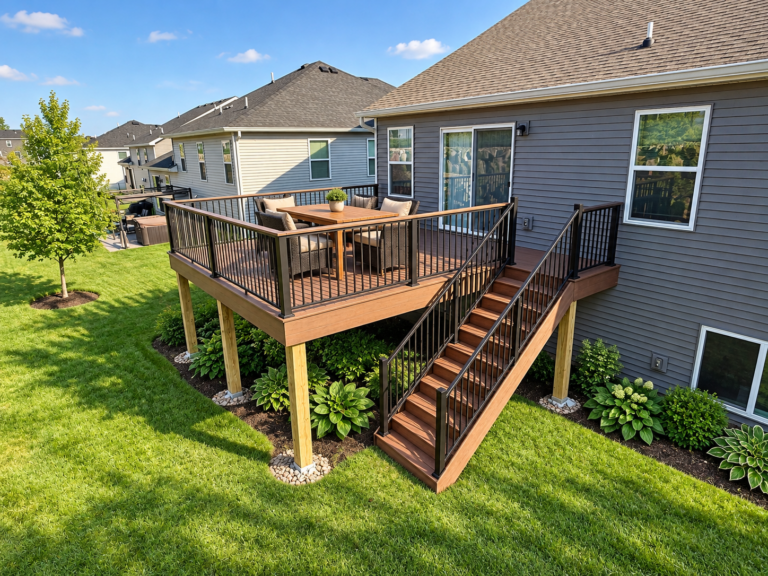
Comparing wood vs composite decking cost means looking beyond the initial price of deck boards. Pressure-treated wood is often the less expensive material to purchase, but cleaning, staining, repairs, and your time can change the picture over years of ownership. Composite typically costs more upfront and requires less routine upkeep. Which is the better value depends on your budget, expectations, and how long you plan to enjoy the deck.
Wood vs Composite Decking Cost: The Upfront Difference
Pressure-treated lumber is generally one of the most affordable decking surfaces. Composite boards usually carry a higher purchase price, and some collections require particular fasteners or installation details. Prices vary significantly by brand, color, board profile, and local availability. Remember that the decking surface is only one part of a project: framing, footings, stairs, railings, labor, and site conditions also affect the total installed price.
For a closer look at the factors that drive a project estimate, read our composite deck cost guide.
Maintenance Costs Add Up Over Time
Wood decks need regular inspection and cleaning. Depending on the wood, exposure, and finish, they may also need periodic staining or sealing. That means buying supplies, hiring a contractor, or setting aside weekends for the work. A shaded or damp location may need extra attention.
Composite decking still needs cleaning and care, but it generally doesn’t require the repeated staining and sealing associated with a finished wood deck. Follow the manufacturer’s care instructions for spills, dirt, snow removal, and approved cleaning products. Neither material is literally maintenance-free.
Repair Costs and the Life of the Deck
Wood boards can split, cup, splinter, or deteriorate, especially when moisture is allowed to linger. Individual boards can often be replaced, although matching older boards may be difficult. Composite boards can also be scratched or damaged and sometimes need replacement rather than refinishing. Decking warranties differ by manufacturer and collection; some composite products offer lengthy limited fade-and-stain coverage, but warranty terms, exclusions, and claim requirements matter.
Just as important, a durable decking surface doesn’t guarantee that the framing, ledger, connections, or footings beneath it will last equally long. Those structural components should be evaluated independently, particularly on an older deck.
How Minnesota Weather Affects Wood and Composite
Minnesota decks experience rain, snow, freeze-thaw cycles, summer sun, and wide temperature swings. Wood expands and contracts as its moisture content changes; regular upkeep helps protect its appearance and serviceability. Composite decking also expands and contracts with temperature, so proper spacing and manufacturer-approved installation methods are essential. Good drainage, ventilation, and routine cleaning benefit both materials.
Wood vs Composite Decking: At-a-Glance Comparison
| Factor | Pressure-Treated Wood | Composite Decking |
|---|---|---|
| Initial decking cost | Usually lower | Usually higher |
| Routine cleaning | Required | Required |
| Staining or sealing | Often needed periodically | Generally not needed |
| Appearance over time | Can weather, splinter, or change color | Varies by product; check fade-and-stain warranty |
| Damage and repairs | Boards can often be repaired or replaced | Damaged boards may require replacement |
| Long-term cost | Depends heavily on maintenance and repairs | Higher upfront cost may be offset by lower upkeep |
What About Chemicals and Environmental Impact?
It’s important to compare today’s products, not outdated assumptions. Modern pressure-treated lumber sold for typical residential deck construction generally does not use the older chromated copper arsenate (CCA) preservative that was phased out of most residential consumer uses in the United States. Treated wood still requires following handling, cutting, disposal, and manufacturer guidance. The U.S. Environmental Protection Agency’s wood-preservative overview explains common preservative types and their uses.
Composite products vary too. Some incorporate recycled materials, but recycled content alone doesn’t establish that one decking choice has a lower overall environmental impact. Product lifespan, manufacturing, transportation, maintenance products, and disposal all matter. Ask for product-specific documentation rather than relying on broad claims that either option is automatically greener.
Think in Terms of Total Cost of Ownership
To compare fairly, add the initial installed cost to the likely expenses over the years you expect to own the deck. For wood, consider cleaning products, stain or sealer, labor, and potential board repairs. For composite, consider cleaning, any repairs, and the higher initial investment. If you maintain your own deck, your time has value even if it doesn’t appear on an invoice.
There’s no universal break-even year. A shaded deck needing frequent wood maintenance may favor composite sooner; a well-maintained wood deck can remain an economical choice for someone comfortable with ongoing upkeep. For a broader discussion of tradeoffs, see our pros and cons of composite decking.
Which Decking Material Is Right for You?
Choose pressure-treated wood if keeping initial costs down is your top priority and you’re prepared for ongoing care. Consider composite if you prefer a more consistent finished appearance and want to spend less time staining and sealing. The right choice should also account for the deck’s structure, your design goals, and the specific product collection.
UglyDeck helps Twin Cities homeowners plan and build professionally installed decks, and we offer DIY deck options for homeowners who want to take on part of the project. Get started with UglyDeck to discuss your project and compare options that fit your budget and priorities.