Skip to content

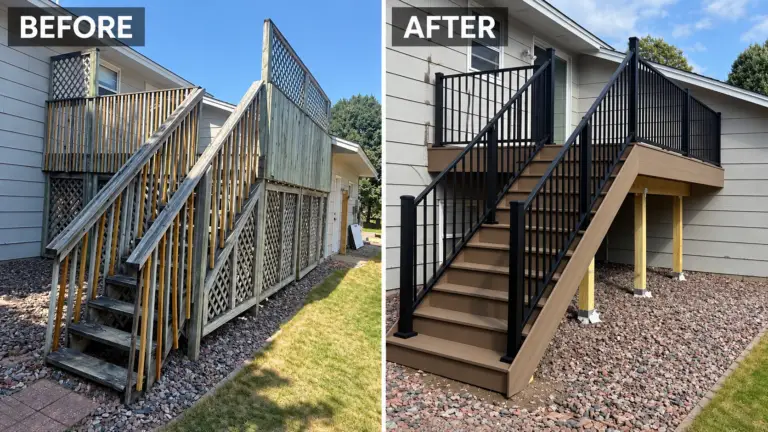
Is your deck safe? A deck can look attractive from above while problems develop in its framing, connections, stairs, or railings. Knowing what to look for helps Minnesota homeowners spot warning signs early and decide when a qualified deck professional should evaluate the structure. A simple visual check is useful year-round—especially before hosting a gathering or when you notice a change in how the deck feels.
This guide covers 10 signs worth watching for. It’s intended to help you recognize concerns, not to replace a professional structural inspection or encourage do-it-yourself repairs to critical connections.
10 deck inspection warning signs
1. Loose or wobbly deck railings
Handrails and guardrails should feel secure. Posts that rock, rails that separate from their connections, or sections that noticeably shift under ordinary use deserve attention. Don’t assume tightening a visible screw fixes a problem—the underlying mounting or framing connection may be compromised.
2. Soft, rotting, or deteriorating framing
From a safely accessible location, look for visibly decayed joists, beams, posts, and other wooden framing members, particularly where water collects. Discoloration alone does not prove rot, but soft, crumbling, or severely deteriorated wood should be assessed promptly. Don’t probe, remove, or pry apart load-bearing connections yourself.
3. Gaps or movement where the deck meets the house
For an attached deck, the ledger and its connection to the home are especially important. Visible separation, sagging near the house, or evidence of water damage at that attachment may indicate a serious issue. A deck should not be assumed safe simply because the deck boards look sound. Some decks are freestanding and don’t have a house ledger.
4. Missing, damaged, or ineffective ledger flashing
Flashing helps keep water away from vulnerable parts of an attached deck’s ledger connection and adjacent building materials. Look for obvious missing or displaced flashing, water staining, or persistent moisture near the connection. Because much of the installation may be concealed, a visual check cannot confirm the ledger was properly flashed or fastened.
5. Rusted, loose, or damaged structural connectors
Deck hardware includes hangers, bolts, approved structural screws, brackets, and other connections. Significant corrosion, visibly displaced hardware, missing connectors, or fasteners pulling out can reduce confidence in the structure. Repairs require the correct hardware and installation method; replacing a questionable connector with a random screw or bolt isn’t a safe substitute for evaluation.
6. Shifting footings or leaning support posts
Uneven settling, leaning posts, uplift, or new gaps between posts and their support hardware can be warning signs. Minnesota’s freeze-thaw cycles make appropriate foundations particularly important. Some decks use concrete footings, while others use engineered foundation systems such as helical piles. The important point is that the supports are properly designed and remain stable.
7. Sagging, cracked, or noticeably distorted beams and joists
A visible sag, a significant crack at a critical location, or a structural member that appears to have shifted may need professional review. Not every surface check or minor crack is a structural failure, but don’t guess about the significance of damage in load-bearing lumber.
8. Loose, uneven, or deteriorating stairs
Pay attention to steps that move, stringers with visible damage, unstable stair railings, or risers and treads that have become uneven. Stairs are a common place for trips and falls, and their attachment to the deck matters as much as the condition of the steps themselves.
9. New or excessive movement underfoot
A little flexibility in a properly designed wood-framed deck can be normal, and composite or PVC decking boards also expand and contract with changing temperatures. New bouncing, unusual swaying, repeated popping, or movement that seems to be increasing should be evaluated. Normal seasonal board movement is different from an unstable frame or railing.
10. Damaged or improperly supported deck boards
Look for loose boards, sharp edges, damaged fasteners, excessive gaps, and trip hazards. Surface problems may be repairable without replacing an entire deck, but the underlying joist spacing and framing condition must be appropriate for any replacement boards. Cosmetic wear and structural problems aren’t the same thing.
When should you stop using a deck?
If you notice serious structural warning signs—such as significant separation from the house, a leaning support post, a failing connection, a collapsing or severely sagging section, or unstable guardrails—stop using the affected deck and keep others away until a qualified professional has evaluated it. Don’t attempt to test its strength by adding people or weight.
If you’re uncertain whether a symptom is cosmetic or structural, seek professional advice rather than assuming the deck is safe.
Can you inspect a deck yourself?
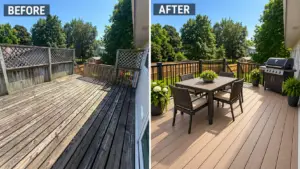
Homeowners can make a useful visual observation from safe, accessible areas. Look for changes in the deck’s condition, note where you see them, and take photos to share with a professional. Avoid climbing under an unstable deck, removing structural hardware, probing suspect supports, or making improvised repairs.
A qualified deck builder or appropriate building professional can assess construction details that may not be visible to a homeowner, including ledger connections, fasteners, support loads, framing, and foundation conditions. A visual homeowner checklist is not the same as a formal structural inspection.
Why UglyDeck pays attention to the structure underneath
Your decking is only as good as the frame you put it on. At UglyDeck, we use #1-grade pressure-treated framing lumber and, where appropriate and available by location, kiln-dried-after-treatment lumber that helps reduce initial moisture and some later shrinkage or twisting. We also focus on the structural details: appropriately designed beams and joists, blocking, foundations, fastening, drainage, and ledger attachment and flashing where applicable.
Higher-grade material can provide useful design flexibility, potentially supporting a cleaner post-and-beam layout when the calculations and code requirements allow it. But grade alone doesn’t guarantee a safe deck—proper design and workmanship remain essential.
UglyDeck has stood behind our professional installation work with a 10-year workmanship guarantee since the company began, subject to the guarantee’s written terms. Manufacturer product warranties and a contractor’s workmanship guarantee cover different things.
Should you repair, resurface, or replace an older deck?
Sometimes isolated surface damage can be repaired, and in other cases an existing frame may be suitable for resurfacing after evaluation. Serious problems with framing, ledger connections, or supports may make full replacement the safer and more sensible route. The decision should follow a sound assessment of the existing structure.
Read our companion guide: Should You Repair, Resurface, or Replace Your Deck in Minnesota?
Planning a safer, longer-lasting deck?
UglyDeck helps Twin Cities homeowners plan professionally installed low-maintenance composite and PVC decks with aluminum railing and careful attention to the structure beneath. Whether you’re considering replacing an aging deck or starting a new project, understanding the construction details makes it easier to compare proposals.
Learn about the UglyDeck difference or set up an appointment to discuss your next deck project.